MXN to USD: What Your Pesos Are Worth, and When Converting Them Is a Mistake
An MXN to USD converter answers the easy half of the question — MX$1,000 is about $54.05 — and quietly skips the hard half, which is whether you should convert at all. Through 2023 and into 2024, peso deposits paid 11.25% while US Treasury bills paid roughly 5%. Plenty of savers took that six-point gap and still finished the year poorer in dollars. This page converts pesos at the live mid-market rate, then works through the arithmetic that decides the question: the breakeven exchange rate, the official Banxico figure your invoice actually settles at, the two-price board at a Mexican bank window, and the coins in your pocket that no exchange desk on earth will take.
MX$1,000 ÷ 18.5 = $54.05
The market never quotes MXN/USD. It quotes USD/MXN — pesos per dollar — which is why the number looks backwards when you're the one holding pesos. At 18.5, that figure means one dollar buys 18.5 pesos, so going the other way you divide:
- MX$1,000: 1,000 ÷ 18.5 = $54.05
- MX$5,000: 5,000 ÷ 18.5 = $270.27
- MX$100,000: 100,000 ÷ 18.5 = $5,405.41
For a rough check without a calculator, divide by 20 and add about 8%: MX$1,000 ÷ 20 = $50, plus 8% lands on $54. The shortcut's error shrinks as the peso weakens toward 20 and grows as it strengthens toward 17, so treat it as a sanity check rather than a substitute. Running the pair the other way — dollars into pesos, where you multiply — is covered on our USD to MXN converter, which breaks down what a remittance actually delivers.
The 11.25% That Wasn't Free Money
Here's the calculation almost no converter page shows you. Say you held MX$100,000 in early 2023, when the rate sat near 17 and CETES paid about 11%, against a US Treasury bill paying 5%. Both legs, one year:
- Stay in pesos: 100,000 × 1.11 = 111,000 pesos
- Convert first: 100,000 ÷ 17 = $5,882, then × 1.05 = $6,176
Now the rate decides it. If the peso weakened to 19 over that year, those 111,000 pesos convert to 111,000 ÷ 19 = $5,842. You earned 11% interest and still finished $334 behind the dollar path — and below the $5,882 you started with. The breakeven sits at 17 × 1.11 ÷ 1.05 = 17.97. Past roughly 18 pesos per dollar, the whole yield advantage is gone.
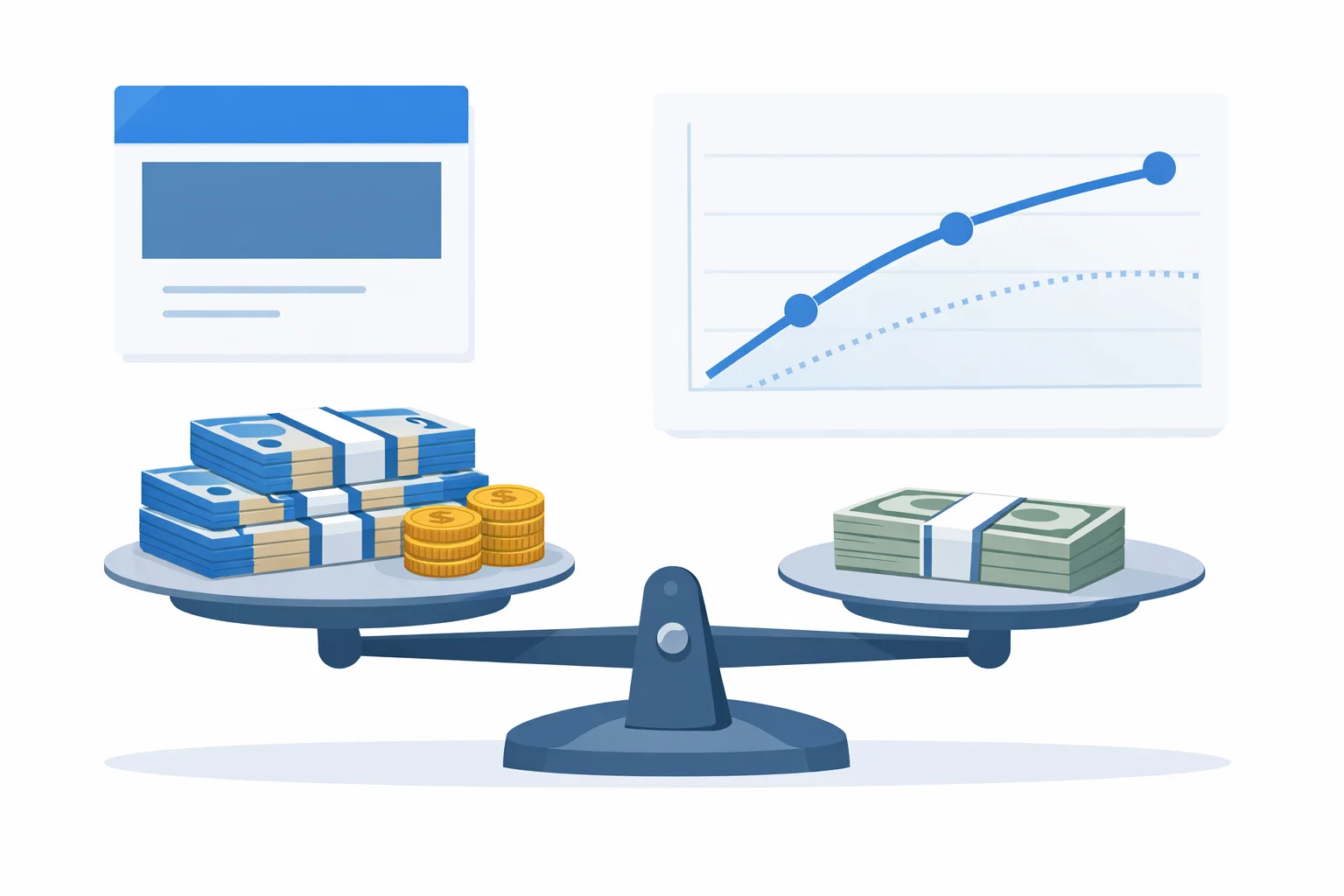
That ratio is what the hold-or-convert panel above computes from whatever rates you type in. It's also why treasurers keep the two decisions separate: earning peso interest and carrying peso currency risk are different trades, and only the first one is predictable. Hedge the second with a forward contract and the hedge costs roughly the interest gap itself — the market's way of telling you the 6% was never free. Check current dollar-side yields against the US Treasury's daily bill rates and the peso side at each week's CETES auction before trusting the panel's defaults.
Banxico's FIX Rate: The Number Your Invoice Uses
If you invoice in dollars from Mexico, or settle a dollar-denominated contract there, the live rate in this tool is not the rate that governs the transaction. Banco de México publishes one official figure per business day — the tipo de cambio FIX, derived from wholesale interbank quotes around noon Mexico City time and published in the Diario Oficial de la Federación. For tax and accounting purposes the applicable FIX is the one published the business day before the transaction date.
That one-day lag isn't a rounding detail. The peso routinely moves 1-2% in a session, and on election nights or Fed surprises it has moved 4%. On a MX$500,000 invoice, a 2% gap between yesterday's FIX and today's market rate is about $540 — enough to swallow a contractor's entire margin. Anyone reconciling Mexican books should pull the daily series straight from Banxico's exchange-rate archive instead of a market feed.
Compra, Venta, and the Cap on Buying Dollars
Walk up to a bank window or casa de cambioin Mexico and you'll see two numbers, not one. Compra is what they pay to buy dollars from you. Venta is what they charge to sell dollars to you. Holding pesos and wanting dollars puts you on the venta side, which typically sits 0.5 to 1.5 pesos above mid-market. At 18.5 mid, a venta of 19.30 costs you 4.3% before any commission — more than most people lose to a bad card fee.
There's a second surprise waiting: you can't buy unlimited cash dollars in Mexico. Anti-money-laundering rules introduced in 2010 cap cash dollar transactions, and in practice banks and exchange houses commonly allow non-customers around $300 a day and $1,500 a month, with account holders permitted up to roughly $4,000 a month. Wire transfers and dollar-denominated accounts sit outside the cash limits, which is why anyone converting a serious sum uses a transfer rather than a counter.
In Cancún, Paying in Dollars Costs You 10%
Resort-zone shops, restaurants and taxis will happily take your dollars. The rate they use is the catch: 15 to 17 pesos per dollar is normal while the market sits at 18.5. Settle a MX$740 dinner bill in dollars at 16 and you hand over $46.25 for something that costs $40 at the real rate — a 15% tip you never meant to leave.
The same trap wears a different hat at the card terminal. When the machine offers to charge you "in USD" rather than pesos, that's dynamic currency conversion, and it adds 3-8% on top of the day's rate. Choose pesos every time and let your own bank convert near mid-market. Withdrawing from a bank ATM — not a standalone machine in a hotel lobby — is almost always the cheapest way to get local cash in the first place.
What Mexican Pay Looks Like in Dollars
Mexico sets its minimum wage per calendar day rather than per hour, and it runs two zones: the general zone, and the northern border free zone where proximity to US employers forces a higher floor. The 2025 figures, converted at 18.5:
| 2025 minimum wage | Per day (MXN) | Per day (USD) | Per month (USD) |
|---|---|---|---|
| General zone | MX$278.80 | $15.07 | $458 |
| Northern border free zone | MX$419.88 | $22.70 | $690 |
Two things fall out of that table. The border premium is about 51% — MX$419.88 against MX$278.80 — which is why maquiladora wages and Tijuana rents look nothing like Oaxaca's. Less intuitive is the second point: Mexico's minimum wage has more than doubled in peso terms since 2018, yet its dollar value depends on where the rate happens to sit. That same MX$278.80 was worth $16.40 at a rate of 17 and $13.94 at 20 — a $2.46 daily swing driven by nothing a worker did. Official rates come from CONASAMI, the national minimum wage commission.
How a Stronger Peso Cuts a Family's Income
Everyone frames a strong peso as good news. On the receiving end of a remittance it's a pay cut. The average transfer from the US to Mexico runs about $390, and the recipient's bills are all in pesos:
- At 20 pesos per dollar: $390 arrives as 7,800 pesos
- At 17 pesos per dollar: the same $390 arrives as 6,630 pesos
That's 1,170 fewer pesos — a 15% income drop with no change to what the sender wired. During the "super peso" stretch of 2023, Mexican households living on dollars watched their real spending power fall even as national remittance records were being set in dollar terms. The same squeeze hits exporters and anyone billing US clients: revenue in dollars, costs in pesos, margin compressed from both ends. Freelancers in the Philippines fight an identical battle with their own peso, which our PHP to USD converter works through in detail.
Why Leftover Peso Coins Are Dead Money
Banks, airport kiosks and exchange desks deal in banknotes. Not one of them takes foreign coins, anywhere in the world — shipping and sorting cost more than the metal is worth. Mexico makes that expensive because its MX$10 and MX$20 coins carry real value: at 18.5, a MX$20 coin is $1.08, and six of them rattling in a bag is $6.49 you'll never see again.
Banknotes fare better, but not well. An airport casa de cambio buying your pesos typically pays 10-15% below mid-market, and a bank back home — if it handles pesos at all — runs 7-10% off. Do the math on MX$2,000: $108 at mid-market, roughly $95 at the airport, about $99 at home. The best exchange rate available to you is the one where you don't exchange at all. Pay the airport taxi in cash, clear the coins on tolls and tips, and keep a couple of hundred pesos for next time.
When Converting Pesos to Dollars Is the Wrong Move
Three situations where the answer is simply don't. If your spending is in pesos — rent, school fees, groceries in Mexico — converting adds a spread on the way out and another on the way back, roughly 2-4% round trip for the privilege of holding money you can't spend locally. If your horizon is short, under three months say, the yield gap is too small to matter: at six points a year, a quarter buys you only 1.5%, well inside the peso's normal three-month range. And if you're converting a small cash sum at a counter, that 4%-plus venta spread can cost more than any rate move would have.
Converting earns its keep on size and duration: a five-figure balance you won't touch for a year, moved by bank transfer at a sub-1% margin, in a stretch when the breakeven figure in the panel above sits uncomfortably close to today's rate. Run your own numbers through it before deciding, and compare provider markups across more than 160 currencies with the multi-currency converter — the spread you pay is the one part of this you fully control.